By Catherine Simpson Bueker, Emmanuel College
Twenty-five years ago, I attended a Fourth of July parade in Boston that has stuck with me.
The head drummer of the colonial fife and drum band was a Black man in a Revolutionary War costume, his dreadlocks peeking from under a powdered wig. As the parade stopped to lay a wreath at the Granary Burying Ground where founding fathers John Hancock and Samuel Adams are buried, a man placed a small stone on the memorial, a Jewish tradition of remembrance. A woman in a colorful sari marched alongside the parade as it continued toward the State House.
To me, then in the early stages of my career as an immigration scholar, the scene told a story of migration and incorporation: Africans forcibly brought here on slave ships in the 17th and 18th centuries, Eastern European Jews arriving in the 19th century, Asian immigrants in the 20th and 21st centuries.
I’m a sociologist who has studied immigration and civic engagement for more than 25 years, including citizenship acquisition, voter turnout and community engagement. In quantifying immigrants’ likelihood of becoming citizens and voting, I’ve come to see that healthy communities and strong societies require more than formal membership and turning out at the polls every few years; they require connecting with neighbors, feeling a sense of responsibility for one another and seeing each other as part of a shared democratic system.
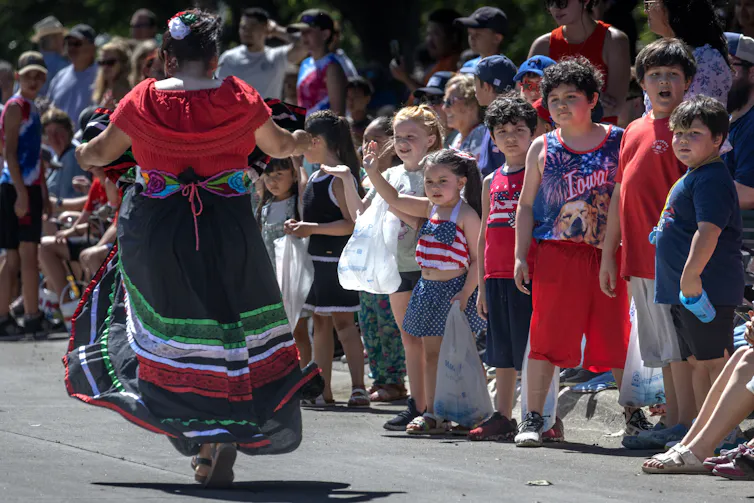
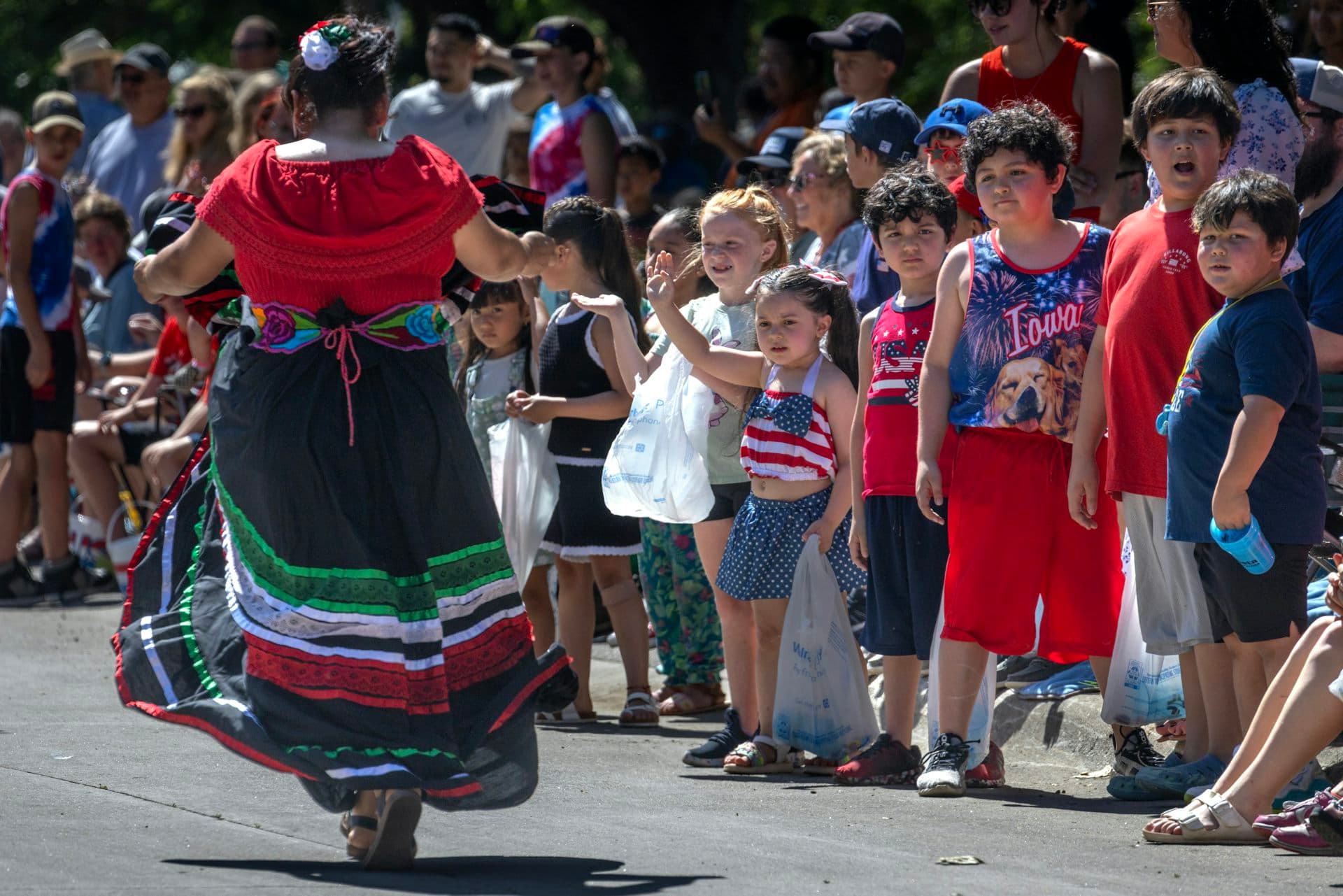
Public celebrations – such as parades, festivals and even road races – can help with this. They play a critical role in society, incorporating the newest Americans into the community and creating a greater sense of belonging for everyone.
Building connection across differences
My recent book, “Beyond White Picket Fences: Evolution of an American Town,” documents how immigrant and ethnic groups have reshaped the historically white, Christian town of Wellesley, Massachusetts, over the past 100 years. Through nearly 100 in-depth interviews, participant observations and archival work – examining more than 20,000 articles, letters to the editor, advertisements and obituaries from the local newspaper throughout the 20th century – I came to see the role that public celebrations play in connecting people.
In an interview for my book, a lifelong Wellesley resident who identifies as Irish and Italian American recounted how her daughters – through Chinese families they danced alongside at a small local dance studio – ended up performing in the Chinese Language School’s Lunar New Year program.
Another community event, the Dreidel Dash, is a 5K begun by the local synagogue that lets Jewish residents take pride in their traditions while offering others a chance to learn. The race starts at the synagogue, where temple members can show newcomers around and explain why they eat food like latkes and jelly-filled donuts at Hanukkah. An Irish Catholic runner who won shabbat candles for finishing first in his division later told me he hadn’t known anything about shabbat beforehand. He learned something about Jewish culture because of his participation in a 5K.
These types of communal celebrations have been associated with feelings of empowerment, a sense of group belonging and collective action. French sociologist Émile Durkheim coined the term “collective effervescence” in the early 20th century to describe the connection, excitement and unity of shared experience, a joy only possible in community.
During my research, I found a social media response to an article reporting on Wellesley’s 2024 Lunar New Year’s Celebration that illustrated Durkheim’s sentiment: “Happy New Year to all!! What a great way to celebrate the Chinese heritage and share the ancient yet lively culture with our communities!!! Sharing helps understanding, sharing STOPS AAPI HATE!!!” AAPI stands for Asian American and Pacific Islander, an umbrella term for Americans with roots in parts of Asia and the Pacific Islands.