Washington and Quito initiate a massive security partnership to dismantle powerful drug cartels and restore order across South America.
QUITO, Ecuador — In a dramatic escalation of regional security efforts, the United States and Ecuador have officially launched a large-scale joint military operation aimed at “disrupting and dismantling” designated terrorist organizations operating within Ecuadorian borders. The offensive, which began on March 3, 2026, represents the most significant level of U.S. military involvement in the country in decades.
The announcement followed a high-stakes visit to Quito by Marine Gen. Francis L. Donovan, Commander of U.S. Southern Command (SOUTHCOM), who met with President Daniel Noboa and senior defense officials to finalize the operational framework.
A New Phase of the ‘Internal Conflict’
For years, Ecuador has been gripped by an “internal armed conflict” declared by President Noboa in early 2024. Once known as one of Latin America’s safest nations, the country has transformed into a primary transit hub for cocaine produced in neighboring Colombia and Peru. This shift has fueled a brutal turf war between gangs that the Ecuadorian government has officially reclassified as “terrorist organizations.”
“Ecuador is one of the United States’ strongest partners in disrupting and dismantling Designated Terrorist Organizations in the region,” Gen. Donovan stated during a press briefing in Quito. “The Ecuadorian people have witnessed firsthand the terror, violence, and corruption that these narco-terrorists inflict.”
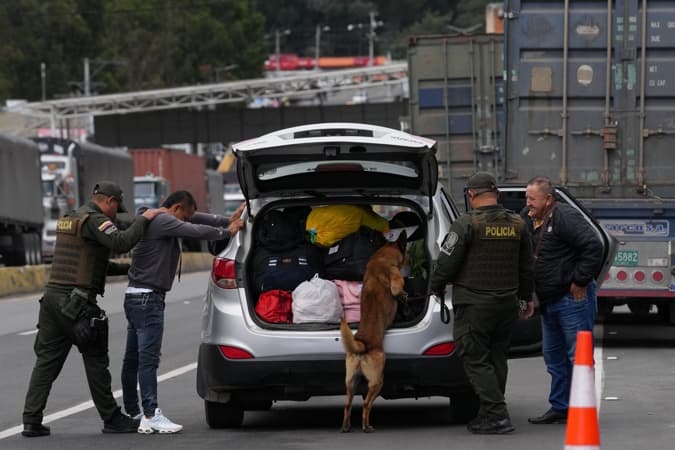
The new mission, part of a broader regional strategy that includes “Operation Mirror” along the Colombian border, focuses on intelligence sharing, maritime interdiction, and “kinetic strikes” against cartel infrastructure.
Strategic Objectives and Military Assets
While officials have been tight-lipped regarding the exact number of boots on the ground, the operation involves a multi-domain approach:
- Maritime Interdiction: U.S. and Ecuadorian naval forces are targeting “narco-subs” and high-speed vessels in the Pacific. This follows a string of “lethal kinetic strikes” conducted by U.S. forces in the Caribbean throughout February 2026.
- Aviation Support: Surveillance aircraft and drones are providing real-time intelligence to Ecuadorian ground troops as they move into gang-controlled “no-go zones,” particularly in the coastal provinces of Guayas and Esmeraldas.
- Logistical Hubs: Despite a 2025 referendum in which Ecuadorian voters rejected the permanent establishment of foreign bases, the U.S. has maintained a “temporary” presence of Air Force personnel at the Manta airbase to facilitate these joint sorties.
Political and Social Stakes
The timing of the operation is critical for President Noboa. Facing an upcoming election cycle in late 2026 and a public weary of persistent violence, Noboa has leaned heavily into his alliance with the Trump administration.
“We are at war,” stated Interior Minister John Reimberg, urging citizens to adhere to strict new curfews in the country’s most violent provinces. “The United States is among the regional allies taking part in a new phase of this struggle.”
However, the intervention is not without its critics. Human rights organizations have expressed concern over the “militarization of public security,” citing a rise in reports of extrajudicial actions and “forced disappearances” since the internal conflict was declared. Opposition leaders have also questioned the U.S.’s constitutional authority to conduct kinetic operations within Ecuador’s sovereign territory.
Regional Ripple Effects
The U.S. military action in Ecuador does not exist in a vacuum. It coincides with a period of heightened American military activity across the continent, including recent interventions in Venezuela and intensified naval patrols in the Caribbean.
U.S. Secretary of State Marco Rubio defended the proactive stance in Washington, noting that the objective is to ensure that “no matter who governs these countries, they will not have the capability to threaten their neighbors or global shipping.”
As the joint forces move into the dense jungles and crowded port cities of Ecuador, the world watches to see if this “shared responsibility” model can finally break the back of the narco-trafficking networks or if it will lead to a protracted and bloody stalemate.
News Sources & Links
- U.S. Southern Command (SOUTHCOM) Official Press Release: Gen. Donovan Visits Ecuador
- NAMPA/AFP: Ecuador launches joint anti-drug operations with US
- U.S. Department of State: Secretary of State Marco Rubio Remarks to Press
- ColombiaOne: Colombia and Ecuador Launch “Operation Mirror”
- CTV News: Ecuador launches joint anti-narco operations with US
- Center for Economic and Policy Research (CEPR): Ecuador’s Crisis Under Noboa: Violence, Militarization, and Corruption
The post by SouthFloridaReporter.com appears on South Florida Reporter.
VIP Journal Media