Persistent extreme weather patterns and escalating reconstruction costs are forcing national insurance premiums to rise far beyond standard inflation.
The American dream of homeownership is facing a new, atmospheric adversary. As we move through 2026, the cost of protecting one’s home has shifted from a predictable line item to a volatile financial burden. Driven by a relentless cycle of “once-in-a-century” storms occurring with annual regularity, the homeowners insurance market is undergoing a fundamental structural repricing. This shift is not merely a temporary spike but a reflection of a world where climate risk is no longer a future projection—it is a present-day liability.
The Rising Tide of Premiums
Recent data from early 2026 reveals a sobering reality for policyholders. Following a staggering 12% increase in 2025, national average premiums are projected to climb another 4% by the end of this year, reaching an average of $3,057 annually. While 4% might seem modest compared to previous years, it represents the fifth consecutive year of significant growth. Since 2021, home insurance costs have soared by 46%, roughly triple the rate of general inflation over the same period.
The burden is not distributed evenly. In states like California, premiums are expected to jump by nearly 16% in 2026 alone, driven by the catastrophic aftermath of the Palisades and Eaton fires. Nebraska, currently grappling with some of the largest wildfires in its history, has seen costs rise 20% since 2023, making it one of the most expensive states for coverage.
Why Weather is Rewriting the Rulebook
For decades, insurance companies relied on historical data to predict future risk. However, the “constant changing weather” has rendered these old models obsolete. Insurers are now pivoting toward forward-looking “catastrophe models” that use climate simulations to account for a warming planet.
Several specific weather phenomena are driving this industry-wide panic:
- Secondary Perils: While “primary” disasters like major hurricanes grab headlines, “secondary perils”—such as severe thunderstorms, hail, and flash floods—are causing record-breaking aggregate losses. In the Midwest, hail claims have become so frequent that many insurers are moving away from covering the full replacement value of roofs, opting instead for depreciated payouts.
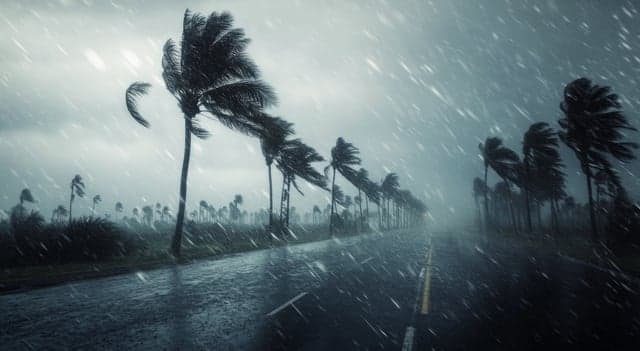
- Warmer Oceans, Stronger Storms: Rising temperatures in the Gulf of Mexico act as high-octane fuel for tropical systems. Hurricanes now retain their strength longer after making landfall, pushing high-wind and flood damage further inland than ever before.
- The Wildfire Frontier: Wildfires are no longer confined to the remote wilderness. Development in the “Wildland-Urban Interface” (WUI) means that when fires occur, they destroy thousands of high-value homes simultaneously, creating “mega-losses” that bankrupt smaller regional insurers.
The Reinsurance Squeeze
Behind every local insurance agent is a global network of reinsurance companies—the insurers for the insurance companies. When extreme weather hits multiple regions at once, these global entities raise their rates to stay solvent. In 2026, the high cost of reinsurance is being passed directly to the consumer.
Because private reinsurance has become so expensive and volatile, policy experts have recently proposed a federal entity called “US Re.” This government-backed reinsurer would aim to absorb the most extreme “tail risks”—the absolute worst-case scenarios—to help stabilize the private market and keep local premiums from spiraling into unaffordability.
The Human and Economic Cost
The impact of these rising rates extends far beyond a monthly bill. In high-risk regions like South Florida, where average premiums are approaching $8,500, the cost of insurance is beginning to freeze the housing market. Potential buyers are finding that even if they can afford a mortgage, they cannot afford the mandatory insurance lenders require.
Furthermore, a “protection gap” is widening. In 2019, only 5% of U.S. homes were uninsured; by 2025, that number jumped to 12%. Many homeowners, particularly those who have paid off their mortgages, are choosing to “go bare”—dropping insurance entirely because the cost has become unsustainable. This leaves families one storm away from total financial ruin and places a massive potential burden on federal disaster relief funds.
Looking Ahead: Resilience as the New Standard
As the industry adjusts, the message to homeowners is clear: the days of cheap, “set-it-and-forget-it” insurance are over. To mitigate costs, many are turning to “home hardening.” Investments in impact-resistant shingles, hurricane straps, and defensible space in wildfire zones are becoming necessary upgrades rather than optional improvements.
The insurance crisis of 2026 is a signal that the climate has changed the economics of where and how we live. Until the frequency of extreme weather stabilizes or the built environment becomes significantly more resilient, the price of protection will likely continue to rise.
Sources Used and Links
- Grist: “Is your state becoming uninsurable? We have the latest data.” (March 18, 2026) https://grist.org/economics/is-your-state-becoming-uninsurable-we-have-the-latest-data/
- Insurify / PR Newswire: “Insurify Projects Average Home Insurance Price Will Climb 4% in 2026, After Jumping 12% in 2025” (March 18, 2026) https://www.prnewswire.com/news-releases/insurify-projects-average-home-insurance-price-will-climb-4-in-2026-after-jumping-12-in-2025-302715236.html
- Consumer Affairs: “Homeowners insurance rates are projected to rise again in 2026” (March 18, 2026) https://www.consumeraffairs.com/news/homeowners-insurance-rates-are-projected-to-rise-again-in-2026-031826.html
- Insurance Journal: “US Home Insurance Prices Set to Keep Rising With Severe Weather” (March 18, 2026) https://www.insurancejournal.com/news/national/2026/03/18/862372.htm
- World Wildlife Fund (WWF): “Escalating Extreme Weather Risks Push US Insurance System to Breaking Point” (January 15, 2026) https://www.worldwildlife.org/news/press-releases/escalating-extreme-weather-risks-push-us-insurance-system-to-breaking-point/
- The Hamilton Project / Brookings Institution: “A proposal for a US federal property reinsurer” (March 18, 2026) https://www.hamiltonproject.org/publication/policy-proposal/a-proposal-for-a-us-federal-property-reinsurer/
- Flatwater Free Press: “Nebraska has some of the most expensive home insurance in the US, new report finds” (March 20, 2026) https://flatwaterfreepress.org/nebraska-has-some-of-the-most-expensive-home-insurance-in-the-us-new-report-finds/
- Truvo: “How Climate Change Is Reshaping Home Insurance in 2026” (March 1, 2026) https://www.truvo.com/blog/how-climate-change-is-reshaping-home-insurance-in-2026
- Arizona Daily Star: “The state of home insurance in 2026: Increasing rates, climate change, and consumer frustration” (January 28, 2026) https://tucson.com/news/nation-world/business/personal-finance/article_06a7e48d-cc7c-5e56-a349-baf8d20ca1c6.html
The post by SouthFloridaReporter.com appears on South Florida Reporter.
VIP Journal Media