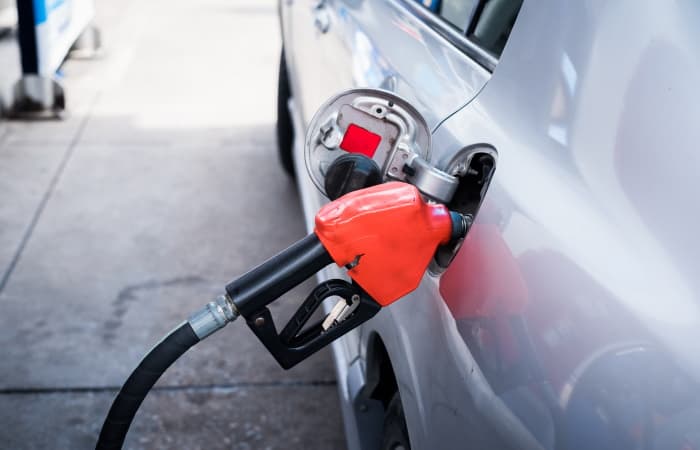
Soaring gasoline costs drove three-quarters of last month's inflation surge, pushing the annual rate to a startling 3.3 percent.
The United States economy faced a significant inflationary headwind in March 2026, as geopolitical instability in the Middle East sent shockwaves through energy markets. According to the latest data from the Bureau of Labor Statistics (BLS) released on April 10, 2026, the Consumer Price Index for All Urban Consumers (CPI-U) surged by 0.9% on a seasonally adjusted basis. This represents a dramatic acceleration from the 0.3% increase recorded in February and pushes the 12-month inflation rate to 3.3%, up from 2.4% the previous month.
The primary culprit for this jump was a massive spike in energy prices, particularly gasoline, which accounted for nearly three-quarters of the total monthly increase in the headline index. While “core” inflation—which strips out volatile food and energy costs—remained relatively stable, the sheer magnitude of the energy rally has reignited concerns about the Federal Reserve’s path toward price stability and the immediate pressure on American household budgets.
The Energy Crisis: A Historic Surge at the Pump
The March report highlighted an extraordinary move in energy markets. The energy index rose by 10.9% in March alone, the largest monthly increase since September 2005. This was driven primarily by a 21.2% increase in the gasoline index, the largest monthly jump since the series began in 1967.
These figures reflect the direct impact of the ongoing war in Iran and the subsequent closure of the Strait of Hormuz, a vital artery for global oil shipments. AAA reported that the national average for a gallon of regular gasoline spiked by more than a dollar in just one month, rising from $2.98 on February 26 to $4.08 by early April. In some regions, the pain was even more acute; California saw averages hit $5.89, while Washington and Hawaii also remained well above the $5.00 mark.
The ripple effects were not limited to gasoline. Fuel oil prices surged by 30.7% over the month, and electricity costs climbed 0.8%. These increases are particularly burdensome as the spring travel season ramps up, increasing demand even as global supplies remain severely constrained by the Middle Eastern conflict.
Consumer Sentiment Hits a Wall
As prices at the pump climbed, American consumer confidence took a significant hit. The LSEG/Ipsos Primary Consumer Sentiment Index for April 2026 (fielded in late March) fell sharply to 50.0, a 3.4-point decline from the previous month. This marks consecutive months of decline, leaving the index nearly three points lower than it was at this time last year.
The “Current Index,” which measures how consumers feel about their personal financial situation and the economy right now, dropped to 44.5. Households are feeling the “sticker shock” of the energy spike, which often serves as a psychological barometer for inflation. While the “Jobs Index” actually rose—reflecting a labor market that remains surprisingly resilient—the “Expectations Index” continued its downward trend, suggesting that Americans are bracing for sustained economic turbulence.
Core Inflation and the “Two-Speed” Economy
Despite the headline-grabbing energy numbers, “core” CPI (all items less food and energy) rose a more modest 0.2% in March. On an annual basis, core inflation stands at 2.6%, a slight uptick from February’s 2.5% but generally in line with analyst expectations.
The March data reveals a “two-speed” economy:
- Service Sector and Goods: Shelter costs rose 0.3%, a slight moderation but still a persistent contributor to the annual rate. Airline fares jumped 2.7%, largely due to the rising cost of jet fuel, while apparel rose 1.0%.
- Deflationary Pockets: Not every category saw price hikes. The medical care index decreased 0.2%, driven by a 1.5% drop in prescription drug prices. Personal care and used cars and trucks also saw modest declines of 0.5% and 0.4%, respectively.
Food prices remained unchanged overall in March. While the cost of dining out (food away from home) rose 0.2%, the cost of groceries (food at home) fell 0.2%, led by a 3.4% decrease in egg prices and a 0.6% drop in meats, poultry, and fish. This offered a small measure of relief to families, even as their transportation costs soared.
Retail Resilience and the Path Ahead
While sentiment has soured, actual spending has yet to collapse. The National Retail Federation (NRF) recently forecast that retail sales in 2026 will grow by 4.4% over 2025. This optimism is based on a “bifurcated” consumer base; while lower-income households are struggling with rising fuel and rent costs, higher-income households continue to drive growth in retail categories.
The NRF notes that “sentiment has remained historically disconnected from actual spending patterns,” but warns that persistent inflation could eventually sap the resilience of the American consumer.
For the Federal Reserve, the March report presents a complex puzzle. While the core inflation rate is nearing the 2% target, the headline “bump” caused by energy could lead to secondary inflationary effects if high transportation costs are passed through to other goods and services. Economists at EY-Parthenon estimate that headline CPI could push toward 3.6% in the coming months as the full weight of the energy crisis is felt across the supply chain.
As the conflict in the Middle East continues, the “energy-driven bump” appears less like a temporary spike and more like a significant hurdle for the U.S. economy’s recovery in 2026.
Sources Used and Links
- Bureau of Labor Statistics: Consumer Price Index – March 2026 Summary https://www.bls.gov/news.release/cpi.nr0.htm
- Bureau of Labor Statistics: Consumer Price Index – March 2026 (Full PDF Report) https://www.bls.gov/news.release/pdf/cpi.pdf
- Fox Business: Inflation surged in March as Iran war’s energy impact hit consumers https://www.foxbusiness.com/economy/cpi-inflation-march-2026
- Trading Economics: United States Energy Inflation – April 2026 Data https://tradingeconomics.com/united-states/energy-inflation
- AAA / Kelley Blue Book: AAA: National Average Gas Prices Spiked In March 2026 https://www.kbb.com/car-news/aaa-national-average-gas-prices-spiked-in-march-2026/
- AAA Fuel Prices: Month: March 2026 – National Gas Average Jumps One Dollar https://gasprices.aaa.com/2026/03/
- Ipsos / LSEG: March 2026 LSEG/Ipsos Primary Consumer Sentiment Index https://www.ipsos.com/en-us/march-2026-lsegipsos-primary-consumer-sentiment-index
- LSEG Lipper Alpha: Consumer Confidence Declines Sharply As All Four Sub-Indices Fall https://lipperalpha.refinitiv.com/reports/2026/04/consumer-confidence-declines-sharply-as-all-four-sub-indices-fall/
- National Retail Federation (NRF): NRF Forecasts 4.4% Annual Retail Sales Growth with New Economic Model https://nrf.com/media-center/press-releases/nrf-forecasts-4-4-annual-retail-sales-growth-with-new-economic-model
- Retail Dive: NRF forecasts 4.4% retail sales growth this year despite rising uncertainty https://www.retaildive.com/news/nrf-forecasts-retail-sales-growth-2026-consumer-uncertainty/815102/
The post by SouthFloridaReporter.com appears on South Florida Reporter.
VIP Journal Media