The Everglades isn’t just one landscape—it’s a mix of distinct ecosystems, each with its own look, wildlife, and purpose.
The Everglades isn’t just one landscape—it’s a mix of distinct ecosystems, each with its own look, wildlife, and purpose. The three most important are hammocks, mangroves, and sawgrass marshes.
Understanding the differences makes exploring the Everglades more meaningful and helps visitors recognize what they’re seeing.
HARDWOOD HAMMOCKS (TREE ISLANDS)

Some are just small patches of high ground
and others are in vast swamps.
What it is:
A slightly elevated island of dense hardwood trees surrounded by wetlands.
Key characteristics:
- Higher ground with drier conditions
- Thick, jungle-like canopy
- Protected from frequent flooding
Common plants:
- Mahogany
- Gumbo limbo
- Live oak
-

As the season becomes drier, alligators congregate in
smaller holes in the Everglades.Orchids and air plants
Wildlife:
- Raccoons
- Tree snails
- Birds and reptiles
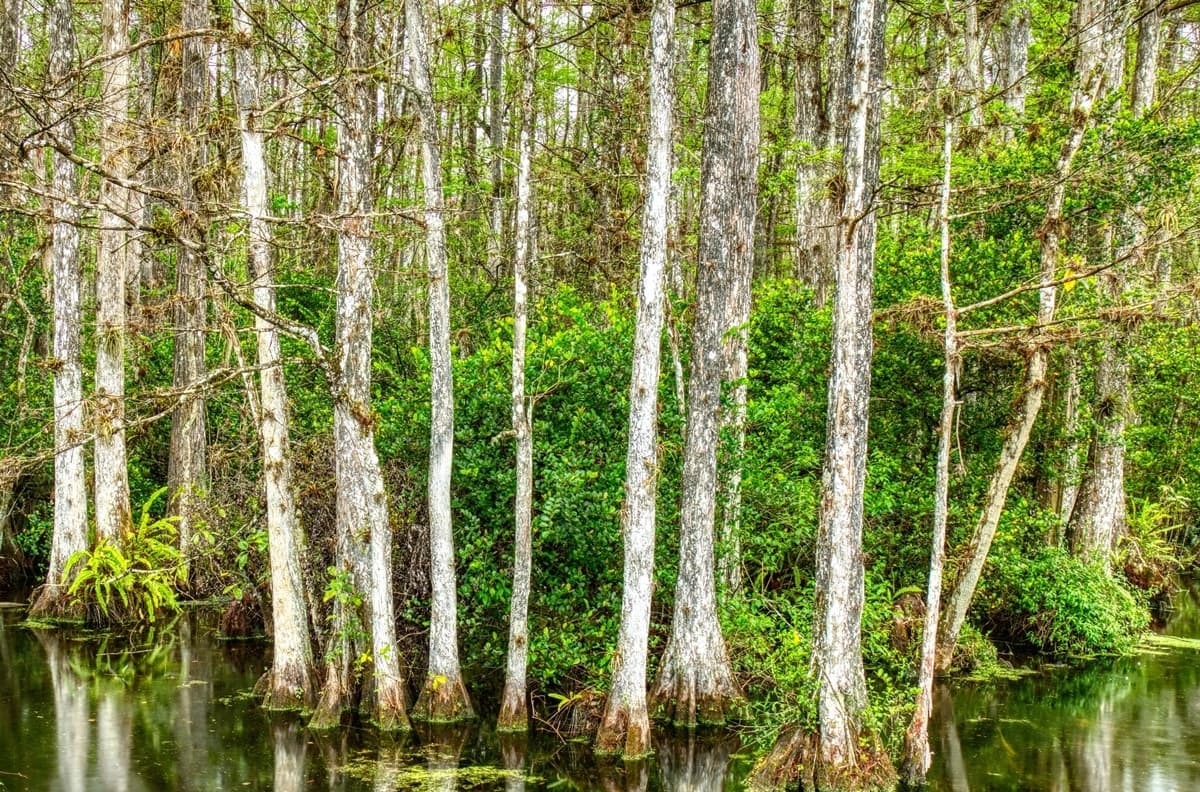
MANGROVE FORESTS (COASTAL WETLANDS)

in the Everglades.
What it is:
Salt-tolerant trees growing in brackish or saltwater along the coast.
Key characteristics:
- Found where freshwater meets the ocean
- Tangled root systems
- Influenced by tides
Main types:
- Red mangrove
- Black mangrove
- White mangrove

Wildlife:
- Fish (snapper, tarpon)
- Crabs
- Birds
- Manatees nearby
Why they matter:
- Protect shorelines
- Reduce storm damage
- Support marine life
SAWGRASS MARSHES (THE “RIVER OF GRASS”)

for miles – it does!
What it is:
A vast freshwater marsh dominated by sawgrass.
Key characteristics:
- Slow-moving water
- Flat, open landscape
- Seasonal flooding
Common features:
- Sawgrass
- Sloughs
-

Birds love sawgrass marshes when looking for their next meal! Marl prairies
Wildlife:
- Alligators
- Wading birds
- Turtles
QUICK COMPARISON
Hammocks: Dry, forested islands
Mangroves: Coastal, saltwater trees
Sawgrass Marshes: Open freshwater wetlands
The post by Florida Travel Blog appears on South Florida Reporter.
VIP Journal Media