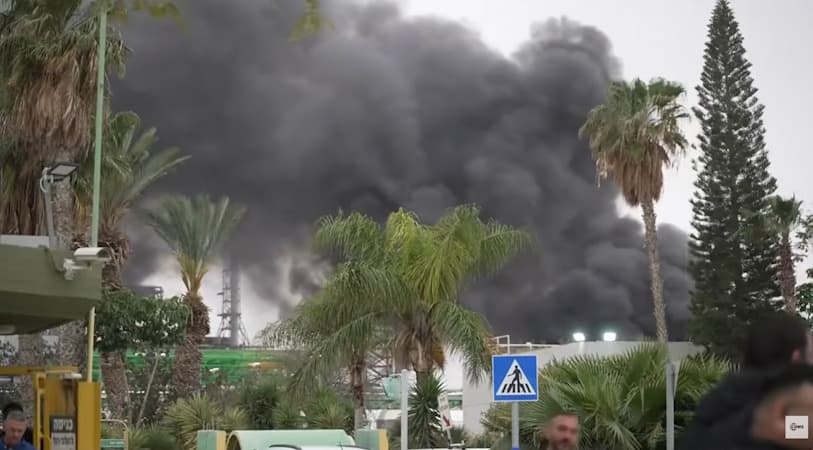
As the Iran War enters its second month, Israeli troops push deeper into Lebanon while missiles rain down nightly.
A Region Realigned by Fire: The February 28 Turning Point
The geopolitical landscape of the Middle East was irrevocably altered on February 28, 2026, a day now etched in history as the commencement of the “Second Iran War.” What began as a series of targeted joint strikes by the United States and Israel—most notably resulting in the assassination of Iranian Supreme Leader Ali Khamenei—has metastasized into a multi-front regional conflagration. As of March 29, 2026, the conflict has expanded from surgical aerial dominance to a high-intensity ground war in Lebanon, direct ballistic exchanges between Jerusalem and Tehran, and a catastrophic disruption of global energy markets.
The transition from a “shadow war” to an existential struggle has been swift. Following the death of Khamenei, the Iranian regime’s command structure, though shaken, consolidated under President Masoud Pezeshkian and the Islamic Revolutionary Guard Corps (IRGC). Tehran’s response was immediate: the total closure of the Strait of Hormuz and a massive mobilization of its regional proxies. For the first time in decades, the “Axis of Resistance” is operating in a synchronized, overt capacity, with Hezbollah, the Houthis, and various Iraqi militias launching coordinated strikes against Israeli and Western interests.
The Lebanon Front: Ground Operations and Humanitarian Collapse
Since March 2, 2026, Lebanon has become a primary theater of violence. Despite the November 2024 ceasefire that had largely held through 2025, the assassination in Tehran provided the spark for Hezbollah to “undertake its duty of confronting the aggression,” as Secretary-General Naim Qassem declared. In response, Israel launched “Operation Northern Shield II,” a massive aerial campaign followed by a ground invasion that began in earnest on March 16, 2026.
The Israeli Defense Forces (IDF) have deployed the 36th, 91st, 210th, and 146th Divisions into southern Lebanon. Ground forces have penetrated beyond the Litani River, aiming to establish a deep buffer zone to prevent Hezbollah’s Radwan Force from conducting cross-border raids. The fighting is characterized by brutal, close-quarters urban combat in fortified villages like al-Khiam and Deir Zahrani.
The human cost in Lebanon is staggering. UN agencies report that nearly one million people—roughly 20% of the Lebanese population—have been displaced. Israeli evacuation orders now cover vast swaths of the country, including major hubs like Tyre and Nabatieh, and increasingly, the southern suburbs of Beirut (Dahiyeh). Lebanese President Joseph Aoun has condemned the offensive as a “fully-fledged crime,” citing the deaths of over 1,100 people and the destruction of critical infrastructure. Hezbollah has responded with thousands of rocket and UAV launches, targeting northern Israeli cities such as Haifa, Safed, and the Krayot, effectively turning northern Israel into a ghost town.
The Direct War: Israel vs. Iran
The most unprecedented aspect of this 2026 conflict is the sustained, direct exchange between Israel and Iran. Breaking the historical reliance on proxies, the two nations are now engaged in a “war of the cities” and a systematic dismantling of strategic assets. Over the weekend of March 28–29, Israel conducted extensive strikes across Iran, focusing on the University of Science and Technology in Tehran and military industrial sites in Borujerd and Tabriz.
Significantly, Israeli strikes have targeted Iran’s nuclear infrastructure. Reports indicate damage to the heavy water facility in Arak and the “yellowcake” production site in Ardakan. These strikes signify a shift in Israeli strategy from containment to active degradation of Iran’s nuclear capabilities. Tehran has responded by launching 16 ballistic missile waves over the past 48 hours alone, targeting Tel Aviv, Jerusalem, and Beersheba.
The IRGC has also expanded the battlefield to the Gulf Arab states. In a bid to punish U.S. allies, Iran launched missile and UAV attacks on the EMAL aluminum plants in the UAE and the international airport in Kuwait. A strike on a Kuwaiti power station recently claimed the life of an Indian worker, highlighting the internationalized nature of the casualties.
The Home Front: Attacks Within Israel
Within Israel’s borders, the population is living under a permanent state of emergency. Since the war began, 393 Iranian attack waves have been recorded. While the Iron Dome, David’s Sling, and Arrow systems have maintained a high interception rate, the sheer volume of incoming fire has caused inevitable “leaks.” Nineteen Israeli civilians have been killed, and over 5,700 have been injured by direct hits or falling debris.
The psychological toll is mounting. Thousands of Israelis gathered in Tel Aviv on March 28 to protest the ongoing war, clashing with police as they demanded a diplomatic off-ramp. These “unauthorized” demonstrations reflect a growing domestic divide over the government’s pursuit of a “New Regional Order.” The domestic security situation is further complicated by the entry of Yemen’s Houthis into the war, who on March 28 launched ballistic missiles toward Eilat and central Israel, vowing to continue until the “aggression on all fronts ends.”
Global Fallout: The Strait of Hormuz Crisis
Beyond the immediate kinetic violence, the 2026 Iran War has triggered a global economic crisis. By March 27, the IRGC officially closed the Strait of Hormuz to any vessel trading with the U.S., Israel, or their allies. This maritime chokepoint, which handles roughly 20% of the world’s oil, is now a graveyard of merchant shipping; at least 12 vessels have been damaged or abandoned due to Iranian mines, drones, and satellite spoofing.
The economic consequences are dire. Gulf energy producers, including Saudi Arabia and Kuwait, have declared force majeure on oil and gas contracts. Global oil prices have spiked, and major shipping firms like Maersk and Hapag-Lloyd have rerouted all traffic around Africa’s Cape of Good Hope, adding weeks to supply chains. The World Economic Forum has warned that a prolonged conflict could “bring down the economies of the world,” particularly import-dependent nations in Asia.
Conclusion: A Looming Quagmire?
As March 2026 draws to a close, there is no clear diplomatic breakthrough in sight. While Pakistan has attempted to mediate between Tehran and Washington, the Iranian leadership has conditioned any ceasefire on the total withdrawal of Israeli forces from Lebanon and the cessation of attacks on Hezbollah. Conversely, the Israeli government and its U.S. backers appear committed to a decisive military victory that permanently alters the regional balance of power.
The “Second Iran War” has proven that the old rules of Middle Eastern conflict no longer apply. With the assassination of a Supreme Leader, the direct targeting of nuclear sites, and the total closure of global energy arteries, the region has entered a period of “forever war” that threatens to consume not just the Levant, but the global economy itself.
Sources Used and Links
- Alma Research and Education Center: Daily Report: The Second Iran War – March 29, 2026 (18:00)
- The Hindu: Iran-Israel war LIVE: Iran strikes Kuwait power station killing one Indian worker
- Wikipedia: 2026 Lebanon war
- Wikipedia: 2026 Strait of Hormuz crisis
- Al Jazeera: Iran war updates: Houthis target Israel again; Iran says infrastructure hit
- ACLED: Israel prepares a ground invasion in Lebanon as Hezbollah formally joins the war
- World Socialist Web Site: Israel begins its long-planned ground invasion of Lebanon
- Chatham House: Analysis: What do Houthi attacks on Israel mean for the Iran war?
- UN News: Middle East war’s ‘spiral of conflict’ drives mounting civilian toll
- Deloitte: Regional Geopolitical Situation – Economic Bulletin March 2026
- World Economic Forum: The global price tag of war in the Middle East
The post by SouthFloridaReporter.com appears on South Florida Reporter.
VIP Journal Media