The administration targets critical sectors like batteries and telecom equipment using alternative legal authorities to bypass recent judicial constraints.
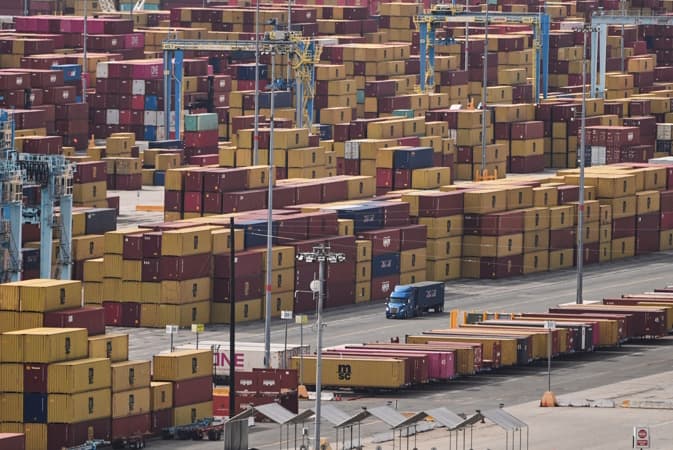
In a swift response to a landmark judicial setback, the Trump administration is preparing a new offensive in its trade war, shifting its legal strategy to target specific industries under the banner of national security. According to a report by The Wall Street Journal, the administration is considering a fresh round of tariffs on at least six key industrial sectors, including large-scale batteries, cast iron, plastic piping, industrial chemicals, and power grid and telecommunications equipment.
The move comes just days after the Supreme Court, in a 6-3 decision, struck down a significant portion of the administration’s second-term trade levies. The Court ruled that the International Emergency Economic Powers Act (IEEPA), which the President had used as the primary legal vehicle for broad global tariffs, does not grant the executive branch the unilateral authority to impose taxes on imports without explicit congressional approval.
Seeking a More Stable Legal Footing
Faced with the potential invalidation of billions of dollars in revenue and a looming $175 billion refund liability for U.S. importers, the White House is turning to Section 232 of the Trade Expansion Act of 1962. Unlike the IEEPA, which the Supreme Court found too vague to support broad tariff-making, Section 232 explicitly allows the president to adjust imports if they are deemed a threat to national security.
The administration has already successfully utilized Section 232 during its second term to maintain or implement tariffs on steel, aluminum, copper, and automotive parts. Because these specific levies are rooted in national security statutes rather than the emergency powers struck down by the Court, they remain legally intact for now.
“Safeguarding America’s national and economic security remains a top priority for President Trump,” White House spokesman Kush Desai told The Wall Street Journal. He emphasized that the administration is “committed to using every lawful authority to deliver” on its economic agenda, signaling that the judicial ruling would change the tactics, but not the ultimate goal, of the president’s protectionist policies.
Targeting the “Next Frontier” of Industry
The specific industries currently under investigation suggest a strategic focus on the infrastructure of the future. By eyeing large-scale batteries and telecommunications equipment, the administration is focusing on sectors where China currently holds significant market dominance.
People familiar with the administration’s plans told the Journal that the Commerce Department is expected to lead these new investigations. While Section 232 requires a formal investigation process—which can be more time-consuming than the immediate executive orders used under IEEPA—it provides the president with nearly unilateral power to set tariff rates once a national security threat is documented.
This pivot is part of a broader “Plan B” being deployed by U.S. Trade Representative Jamieson Greer and other top economic advisors. In addition to the Section 232 probes, the administration has already announced a temporary 15% global tariff under Section 122 of the Trade Act, a provision intended to address balance-of-payments emergencies. However, that authority is time-limited to 150 days, making the Section 232 “national security” path a more viable long-term solution for the administration’s goals.
Market and Diplomatic Fallout
The legal maneuvering has already begun to disrupt international trade relations. Following the Supreme Court’s ruling, the European Union reportedly froze the ratification process for a pending trade agreement with the U.S., seeking clarity on which American tariffs would remain in place and which would be refunded.
On social media, President Trump issued a blunt warning to trading partners who might seek to capitalize on the Supreme Court’s decision. “Any Country that wants to ‘play games’ with the ridiculous Supreme Court decision… will be met with a much higher Tariff, and worse,” he posted on Monday. He reiterated his stance that he does not believe he needs to go back to Congress for approval, despite the Court’s emphasis on the separation of powers.
The financial stakes are massive. Analysts estimate that invalidating the IEEPA-based tariffs could result in refunds of nearly $175 billion to American businesses. However, the president suggested that these refunds would not be granted easily, stating that the government would likely be “in court for the next five years” over the matter.
The Road Ahead
The administration’s shift to Section 232 is expected to trigger a new wave of lobbying and litigation. While the Supreme Court’s recent ruling focused specifically on the IEEPA, legal experts suggest that the Court’s “Major Questions Doctrine”—which requires Congress to speak clearly on matters of vast economic significance—could eventually be applied to Section 232 as well.
For now, however, the White House is betting that the broad definition of “national security” will provide the necessary cover to continue its trade agenda. By moving the fight from “economic emergency” to “national security,” the administration hopes to outmaneuver the courts and maintain its leverage over global trading partners.
As the Commerce Department begins its new investigations, the message from the White House remains clear: the Supreme Court may have removed one tool from the president’s belt, but the administration is more than willing to forge new ones to keep its tariff program alive.
Primary Source
- The Wall Street Journal (Original Report): Trump Considers New National Security Tariffs After Supreme Court Ruling (Note: This article detailed the administration’s shift to Section 232 investigations for batteries, telecom equipment, and industrial chemicals.)
Secondary Reports & Legal Context
- The Japan Times: Trump eyes new ‘national security’ trade probes to revive tariffs after ruling
- Reuters / Indian Express: Donald Trump considers new national security tariffs after Supreme Court ruling
- Livemint / Bloomberg: Here’s how Trump plans to use national security law to replace struck tariffs
- Thomson Reuters: What the Supreme Court tariff ruling means for global trade
- Wikipedia: Learning Resources, Inc. v. Trump (Case Overview)
The post by SouthFloridaReporter.com appears on South Florida Reporter.
VIP Journal Media