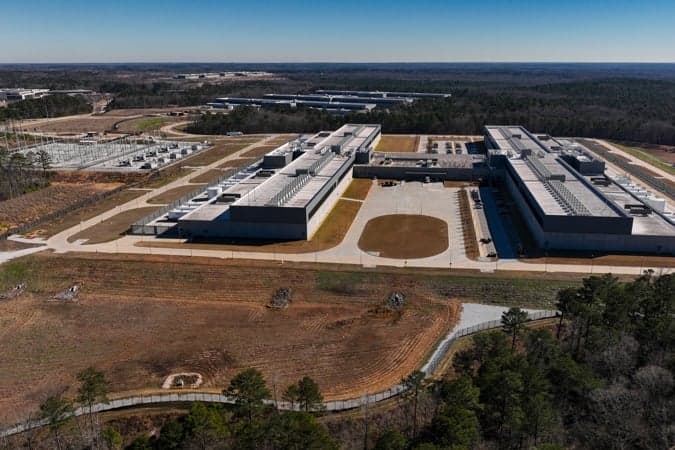
President Trump to meet tech CEOs next week to finalize a pledge ensuring data centers don't raise electricity prices.
WASHINGTON, D.C. — The White House is finalizing preparations for a high-stakes summit scheduled for March 4, 2026, where President Donald Trump is expected to host the leaders of America’s most powerful technology firms. The objective is a formal commitment to the “Ratepayer Protection Pledge,” an initiative designed to compel the tech industry to finance its own energy infrastructure rather than pass costs on to American households.
The meeting comes on the heels of the President’s State of the Union address, delivered on February 24, where he issued a blunt ultimatum to Silicon Valley. “We’re telling the major tech companies they have the obligation to provide for their own power needs,” the President stated. “They can build their own power plants so no one’s prices will go up.”
The Multi-Billion Dollar Power Struggle
The upcoming summit is the culmination of months of friction between the administration and “hyperscalers”—the massive companies like Microsoft, Google, Meta, and Amazon that operate the data centers powering the global AI boom. These facilities are notoriously energy-intensive; a single new AI-focused data center can consume as much electricity as a small city, often requiring massive grid upgrades that have historically been subsidized by local ratepayers.
Public backlash has intensified over the last year, particularly in “Data Center Alley” in Northern Virginia and emerging hubs in Georgia and Ohio. With electricity costs climbing faster than inflation, the administration views the rapid expansion of AI as a significant political liability heading into the 2026 midterms.
Who Is on the Guest List?
According to White House officials, the March 4 meeting is expected to include a “who’s who” of the technology and energy sectors. Invitations have reportedly been extended to:
- Satya Nadella (Microsoft)
- Sundar Pichai (Alphabet/Google)
- Mark Zuckerberg (Meta)
- Jeff Bezos or Andy Jassy (Amazon)
- Sam Altman (OpenAI)
- Elon Musk (xAI)
- Safra Catz (Oracle)
Energy Secretary Chris Wright is also expected to play a central role, serving as the bridge between tech firms and utility providers.
The Mechanics of the “Pledge”
While the agreement under discussion is largely non-binding, it represents a significant policy shift. The White House is pushing for several core commitments:
- Direct Infrastructure Funding: Tech giants would be expected to pay 100% of the costs for new transmission lines and grid upgrades specifically required for their projects.
- On-Site Generation: The administration is encouraging companies to build their own dedicated power sources—ranging from natural gas turbines to Small Modular Reactors (SMRs)—directly on-site to reduce their “draw” from the public grid.
- Emergency Load Shedding: Under the proposed framework, data centers would agree to be “curtailed” (powered down) during peak heatwaves or freezes to ensure residential neighborhoods keep the lights on.
A Balancing Act for AI Dominance
The Trump administration faces a delicate “two-front war.” On one hand, it is committed to maintaining American dominance in AI to stay ahead of China. On the other, it must address the economic anxiety of voters facing high utility bills.
“The administration has closely embraced the AI industry as an engine of economic growth,” noted energy analysts. “But they have warned tech companies that they risk a massive public backlash if the public believes their servers are driving up the cost of living.”
For their part, many tech companies have already begun signaling a willingness to comply. Microsoft has previously expressed support for efforts to ensure data centers do not contribute to higher consumer prices, and companies like Meta and Google have already begun investing in proprietary clean energy projects to meet their own sustainability targets.
The Legislative “Carrot”
To secure the tech giants’ signatures, the White House is offering a significant “carrot”: permitting reform.
Administration officials are expected to discuss a new executive order that would move data center projects into the FAST-41 framework. This would effectively put these projects on a “fast track” for federal reviews, bypassing the years of red tape that currently stall the construction of power plants and transmission lines. By agreeing to “pay their own way,” Big Tech may finally get the speed and certainty they need to build out their AI empires.
Sources and Links
- Reuters: White House to host Big Tech in pledge to rein in power costs (Published Feb 25, 2026)
- The White House: President Trump, Tech Leaders Unite to Power American AI Dominance (Background on 2025 AI Action Plan)
- Politico Pro: Trump to announce data center energy deals during State of the Union (Published Feb 24, 2026)
- Associated Press: As electricity costs rise, everyone wants data centers to pick up their tab (Published Feb 12, 2026)
- Seeking Alpha: Trump orders tech giants to power their own AI data centers under ‘rate protection’ pledge (Published Feb 25, 2026)
- Bloomberg: Trump Seeks Vows from Tech Executives to Cover Data Center Costs (Published Feb 24, 2026)
The post by SouthFloridaReporter.com appears on South Florida Reporter.
VIP Journal Media