Why Didn’t I See Any Alligators At The Everglades? A Florida Resident Explains
22 марта 2026 г.
During the wet season, water levels rise across the park’s 1.5 million acres, and roughly 200,000 alligators disperse into the vast flooded grasslands where you simply can’t see them.
During the wet season, water levels rise across the park’s 1.5 million acres, and roughly 200,000 alligators disperse into the vast flooded grasslands where you simply can’t see them.
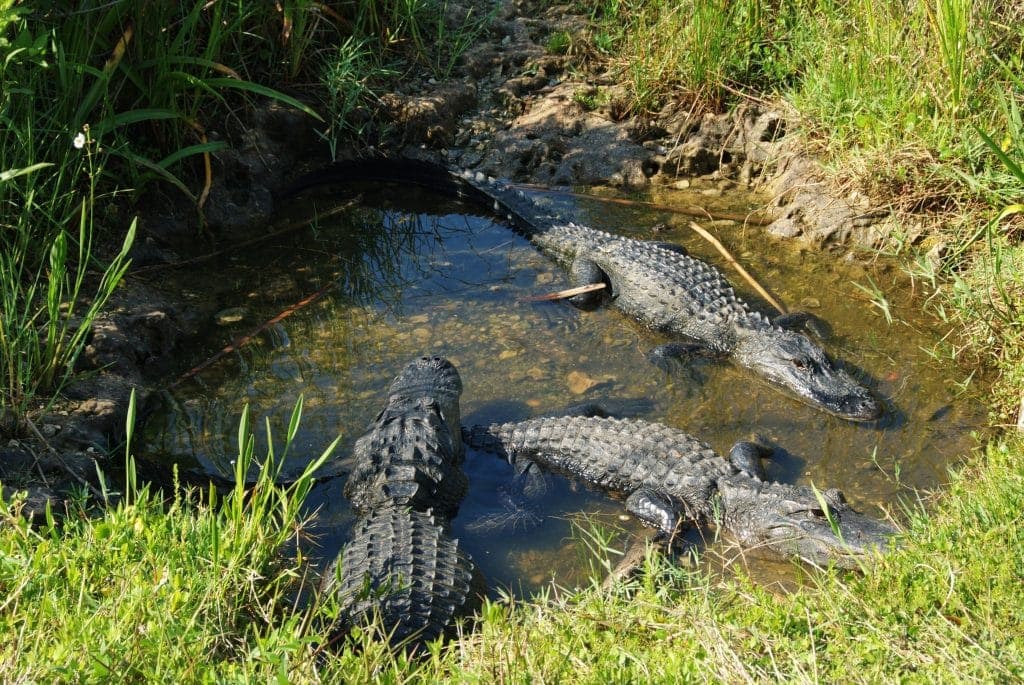
In dry season (November through April), shrinking water forces those same alligators to crowd around the few remaining pools and canals — right next to the boardwalks and trails where visitors walk.
That’s the difference between seeing zero alligators and seeing 50 in a single morning.
As the season becomes drier, alligators congregate in smaller holes in the Everglades.
Why This Catches Visitors Off Guard
We get it. You flew into Miami, drove an hour south, paid the entrance fee, and hopped on a tram tour at Shark Valley expecting wall-to-wall gators.
Every photo you’ve ever seen of the Everglades has an alligator in it. So what happened?
Here’s what most travel guides won’t spell out for you: the Everglades is not a zoo.
There are no enclosures. No feeding schedules. The wildlife viewing experience changes dramatically by season — more so than almost any other national park in the country.
As Florida residents who visit the Everglades year-round, we’ve watched the same stretch of the Anhinga Trail go from a dozen alligators stacked on top of each other in February to an empty, flooded sawgrass prairie in July.
“As water levels rise, animals disperse making wildlife viewing more challenging.”
That single sentence is the explanation most visitors never see before booking their trip.
The Science Behind the Disappearing Alligators
Understanding why alligators vanish in summer requires knowing two things about how they live.
1. Alligators Are Ectotherms — They Can’t Regulate Their Own Body Temperature
Unlike mammals, alligators rely entirely on their environment to control body heat. According to the Florida Fish and Wildlife Conservation Commission (FWC), alligators are most active when temperatures are between 82°F and 92°F. When South Florida summer temps push well above that — with heat indices regularly exceeding 100°F — alligators retreat to deeper water, dens, and mud burrows to cool down.
The U.S. Fish & Wildlife Service explains this behavior succinctly: alligators “thermoregulate like other reptiles by basking in the sun and cooling down in the shade and water.” In the Everglades’ brutal summer heat, cooling down wins — and that means staying submerged and out of sight.