The Death of Diplomacy: Islamabad Talks Terminated The fragile hope for a negotiated settlement to the 2026 Iran crisis evaporated over the weekend of April 25–26.
The Death of Diplomacy: Islamabad Talks Terminated
The fragile hope for a negotiated settlement to the 2026 Iran crisis evaporated over the weekend of April 25–26. What was meant to be a final “shuttle diplomacy” push in Islamabad ended in an abrupt and total breakdown. Late Saturday evening, U.S. envoys Steve Witkoff and Jared Kushner were seen departing the Marriott Islamabad, followed shortly by the Iranian delegation led by Foreign Minister Abbas Araghchi.
By Sunday morning, the Pakistani Foreign Ministry issued a terse statement: “Despite exhaustive efforts to find common ground, the fundamental gap between the parties’ core security requirements remains unbridgeable. No further sessions are scheduled.”
The collapse reportedly centered on the “Zero Enrichment” mandate. The U.S. delegation, backed by the Trump administration’s “maximalist” posture, refused to lift the counter-blockade until every gram of enriched uranium was physically removed from Iranian soil. Tehran countered by demanding an immediate end to the naval “strangulation” of its ports before any nuclear concessions were made. The resulting deadlock has effectively ended the ceasefire, returning the Persian Gulf to a state of high-intensity kinetic readiness.
Market Futures: The “Monday Meltdown”
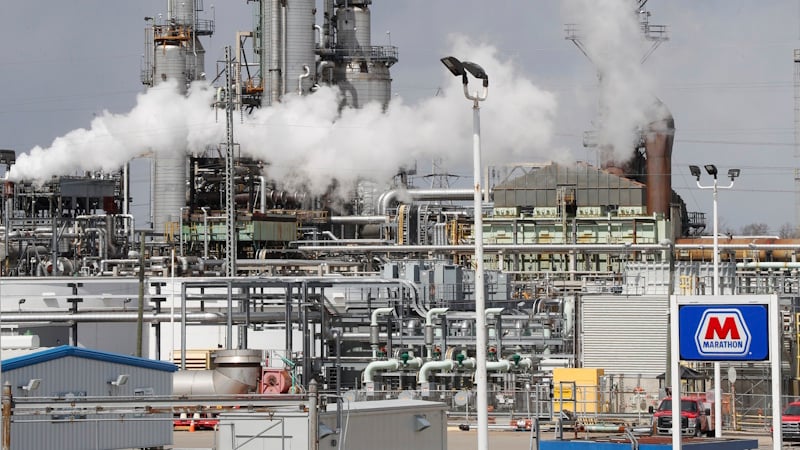
Image ID: 20112781383327
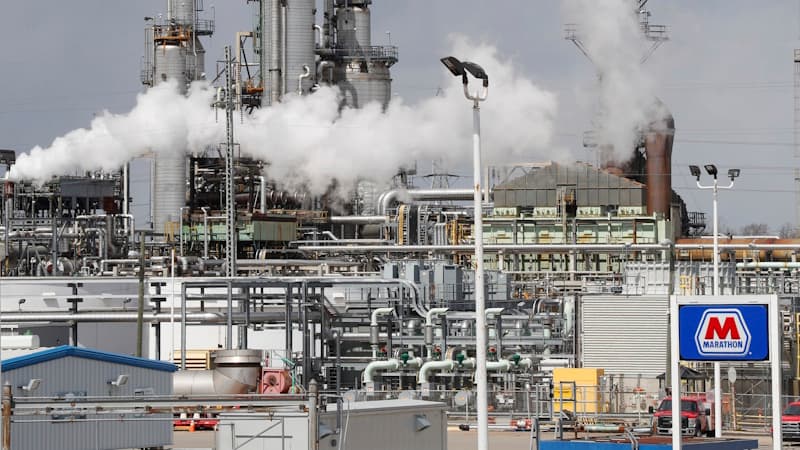
Article: The Marathon Petroleum Corp. refinery is shown in Detroit, Tuesday, April 21, 2020. The world is awash in oil, there’s little demand for it and we’re running out of places to put it. That in a nutshell explains this week’s strange and unprecedented action in the market for crude oil futures contracts, where traders essentially offered to pay someone else to deal with the oil they were due to have delivered next month.(AP Photo/Paul Sancya)
Global financial markets, which had priced in a 60% probability of a “Pakistani Peace,” are now in a state of freefall. In early Sunday evening trading in the Asian pre-markets, Brent Crude futures for June delivery spiked $14 per barrel in a matter of minutes, briefly touching $122.50.
Wall Street analysts are describing the situation as a “worst-case scenario.” Without the diplomatic exit ramp provided by the Islamabad talks, the market is now forced to account for a permanent closure of the Strait of Hormuz. Goldman Sachs issued an emergency note to clients on Sunday evening, warning that if the U.S. counter-blockade transitions into a full-scale naval engagement, oil could shatter the $180 mark by mid-May.
The volatility has extended to the S&P 500 and DAX futures, which have dropped by 4% and 5% respectively, as investors flee to safe-haven assets like gold and U.S. Treasuries. The “geopolitical risk premium” is no longer a peripheral concern—it is now the primary driver of global asset pricing.
Gas and Crude: The Domestic Pain Deepens
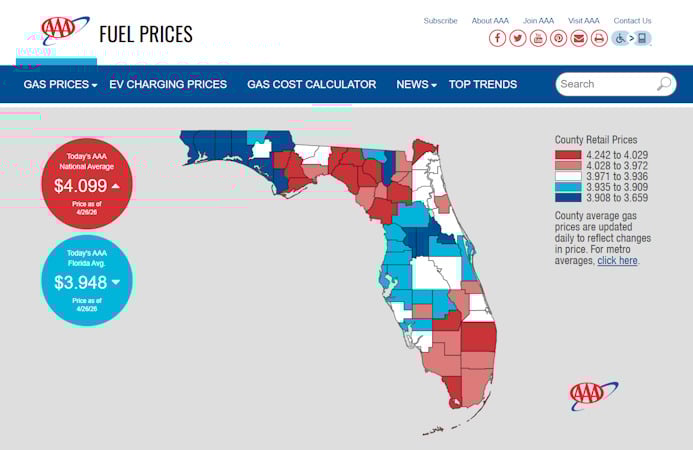 The collapse of the talks is a direct blow to the global consumer. Crude prices, which had moderated to around $100 last week on hopes of a deal, are now firmly entrenched in the triple digits. For the United States, this transition is particularly painful.
- Crude Prices: WTI (West Texas Intermediate) jumped to $116.80 on Sunday night.
- National Average Gas Prices: Analysts at AAA predict the national average will surge past $4.75 per gallon by Wednesday, with California and Washington state likely seeing prices exceed $6.00.
The “America First” energy strategy, while increasing domestic production to 14.5 million barrels per day, cannot insulate the U.S. from the global price shocks caused by the removal of 20% of the world’s daily oil flow. Refineries on the East Coast, which rely on imported light-sweet crude, are reporting “critically low” inventories, sparking fears of localized fuel rationing if the Hormuz blockade persists for another thirty days.
The Blockade: From Standoff to Siege
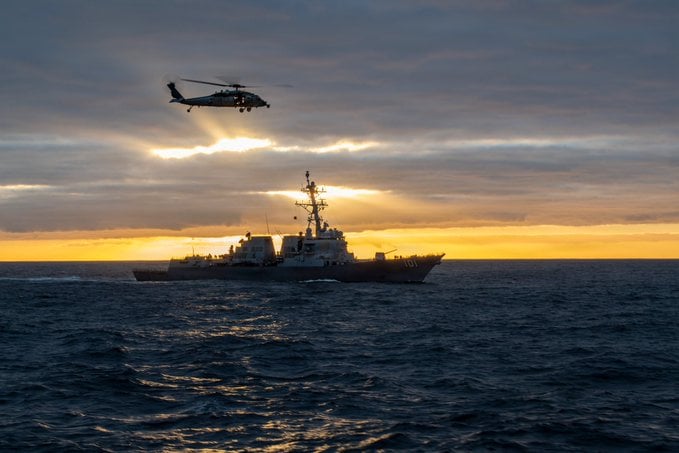
The Strait of Hormuz has officially become a “No-Go Zone” for commercial shipping. Following the walk-out in Islamabad, the Islamic Revolutionary Guard Corps (IRGC) announced the “indefinite closure” of the waterway, citing the presence of U.S. “aggressor” naval forces as a direct threat.
In retaliation, the U.S. Navy’s 5th Fleet has intensified its “counter-blockade.” Every vessel attempting to enter or exit Iranian waters is being intercepted. This “maritime siege” has effectively ended Iran’s “shadow fleet” exports to East Asia. However, the cost of this victory is the total paralysis of the world’s most critical energy artery.
The U.S. Secretary of War, Pete Hegseth, clarified the new Rules of Engagement (ROE) on Sunday afternoon: “The era of strategic patience is over. If the IRGC moves to mine the Strait or deploy coastal batteries against neutral shipping, the response will not be proportional—it will be total.”
The Geopolitical Void
With the Islamabad channel closed, the “Islamabad Proposal”—which included a 20-year enrichment freeze and a reconstruction fund—is now a dead letter. The focus has shifted from the Pakistani Prime Minister’s residence to the Situation Room and the IRGC headquarters in Tehran.
European and Asian leaders have expressed “profound alarm” at the collapse. China, which relies on the Persian Gulf for the majority of its energy needs, has called for an “immediate return to the table,” though its influence over Tehran appears to have reached its limit. For the global economy, the end of the talks signals the beginning of a long, dark winter of energy scarcity and military brinkmanship.
Sources Used and Links:
- Fox News: Live Updates: Hegseth warns of ‘total response’ as Iran talks in Islamabad collapse over the weekend
- UK Parliament (House of Commons Library): The collapse of the 2026 US-Iran Islamabad summit: What happens next?
- Goldman Sachs: Emergency Note: Market Futures and the Failure of Diplomacy in the Gulf
- J.P. Morgan Global Research: Revised Oil Price Forecast: $150+ Scenario Following Talk Collapse
- The Guardian: Oil futures skyrocket as Iran talks end without deal in Pakistan
- Import Globals: Strait of Hormuz: Total Blockade Tightens as Diplomatic Channels Fail
- Wikipedia (Current Events): Timeline of the 2026 Islamabad Summit Failure
- Seeking Alpha: Crude futures surge 12% in Sunday pre-market as Iran talks called off
The post by SouthFloridaReporter.com appears on South Florida Reporter.
VIP Journal Media