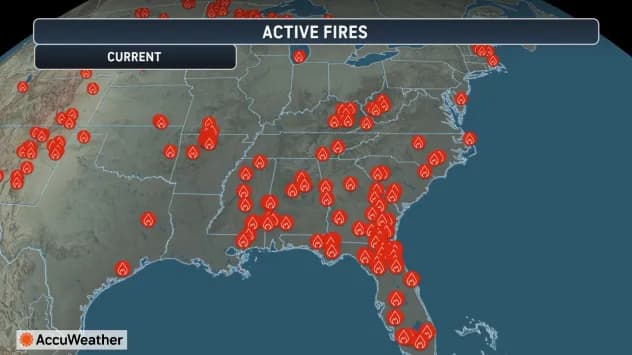
Widespread rain showers are finally sweeping through the Southern states providing crucial moisture to help combat persistent drought.
The meteorological landscape of the Southern United States is undergoing a profound and necessary transformation. For months, vast stretches of territory from the arid plains of Texas to the lush but drying forests of the Carolinas have languished under a persistent atmospheric block. This stagnation led to parched soils, dwindling reservoirs, and a burgeoning wildfire season that threatened both rural communities and suburban fringes. However, a significant shift in upper-level wind patterns is finally unlocking the gates for moisture-rich air to surge northward from the Gulf of Mexico, bringing the promise of revitalization.
The Return of the Rain
The current weather pattern marks a departure from the high-pressure dominance that has characterized much of the season. Meteorologists have been tracking a series of low-pressure systems moving across the mid-section of the country, which are now beginning to tap into deep subtropical moisture. As these systems interact with a stalled frontal boundary along the Gulf Coast, the result is a sustained period of precipitation that many residents have been waiting for since late summer.
According to AccuWeather reports, this shift is more than just a passing shower. The organization notes that “rain returns to the Southern US, bringing drought and wildfire relief,” a development critical to stabilizing the region’s environmental health. The moisture is expected to be widespread, covering a corridor that includes parts of the Deep South, the Tennessee Valley, and the Southeast.
The Mechanics of the Drought Relief
Drought is often a silent crisis, building slowly over weeks and months until the cumulative deficit of rainfall reaches a breaking point. In the Southern U.S., the recent dry spell has been particularly taxing because it coincided with higher-than-average temperatures. This increased the rate of evapotranspiration, drawing moisture out of the soil and vegetation at an accelerated pace.
When rain returns to such a parched environment, the initial impact is often visual—the landscape turns from a brittle brown to a vibrant green—but the physical benefits go much deeper. The steady, soaking nature of the current rainfall is ideal for drought recovery. Unlike a sudden tropical downpour that might run off the hard-baked surface, these persistent showers allow the water to infiltrate the soil profile, recharging the root zones of trees and agricultural crops.
Mitigating the Wildfire Threat
One of the most immediate benefits of the returning moisture is the reduction in wildfire volatility. Throughout the autumn months, the South saw a spike in brush fires and forest blazes. Leaf litter, which becomes highly flammable when humidity drops and rainfall ceases, provides ample fuel for fast-moving fires.
The introduction of widespread rain effectively “resets” the fuel moisture levels. By soaking the forest floor and increasing the relative humidity of the ambient air, the weather is doing what thousands of firefighters cannot: providing a comprehensive blanket of suppression. While a single rain event cannot permanently eliminate fire risk, the current pattern offers a significant window of safety, allowing fire crews to contain existing blazes and preventing new ignitions from spreading uncontrollably.
Regional Breakdown: From Texas to the Carolinas
The impact of this weather shift is not uniform across the South, but its benefits are being felt in distinct ways across several states.
Texas and the Southern Plains: In the western reaches of the South, the rain is helping to alleviate a “flash drought” that threatened winter wheat crops. The arrival of moisture in these regions is often hit-or-miss, but the current jet stream configuration is steering storms directly into the heart of the plains, providing a lifeline to the agricultural sector.
The Gulf Coast States: Louisiana, Mississippi, and Alabama are seeing the heaviest accumulations. In these areas, the concern had transitioned from dry lawns to falling river levels, which can impact barge traffic and local water supplies. The influx of rain is helping to stabilize these vital waterways.
The Southeast and Appalachia: In Georgia and the Carolinas, the terrain adds another layer of complexity. The mountainous regions of the Appalachian Mountains are particularly susceptible to wildfire when dry. The returning rain is critical here, as the steep topography makes manual firefighting exceptionally difficult. The moisture is also replenishing the headwaters of major rivers that flow toward the Atlantic coast.
The Agricultural and Ecological Perspective
For farmers, the timing of this rain is a double-edged sword but ultimately a blessing. While heavy rain can occasionally delay late-season harvesting or field preparation, the need for moisture in the upcoming growing seasons outweighs the minor inconveniences of mud and standing water. Soil health is the foundation of the Southern economy, and without this late-season recharge, the outlook for next year’s yields would be grim.
Ecologically, the rain supports more than just plants. Local wildlife populations, which often struggle during droughts as watering holes dry up and food sources become scarce, are finding immediate relief. The replenishment of vernal pools and small streams supports amphibians and insects that form the base of the regional food web.
The Risks of “Too Much of a Good Thing”
While the headline is undoubtedly positive, meteorologists warn that the transition from extreme drought to heavy rain carries its own set of risks. When the ground is exceptionally dry, it can become hydrophobic—literally repelling water rather than absorbing it. This can lead to flash flooding, particularly in urban areas with significant paved surfaces.
Furthermore, the Southern U.S. is known for its clay-heavy soils. Once these soils become saturated, they lose their structural integrity, which can lead to localized landslides in hilly terrain or falling trees as root systems lose their grip in the mud. Residents are encouraged to remain weather-aware, as the same storms bringing drought relief can also bring gusty winds and the potential for severe weather.
Long-Term Meteorological Outlook
Is this the end of the drought? Meteorologists suggest caution. While this series of storms provides a major dent in the rainfall deficit, true drought recovery is a long-term process. It takes months of consistent, above-average precipitation to fully recharge deep aquifers and restore reservoir levels to their historical norms.
However, the current pattern suggests a more active corridor for storms than we have seen in recent months. As the atmosphere transitions into a different seasonal phase, the likelihood of recurring moisture increases. The interaction between the cooling North American continent and the still-warm waters of the Gulf of Mexico provides a reliable engine for storm development, as long as the upper-level steering currents remain favorable.
Conclusion: A Season of Renewal
The return of rain to the Southern United States is a reminder of the cyclical and often dramatic nature of our climate. After a period of stressful dryness and the constant shadow of wildfire, the sound of rain on the roof is a welcome change for millions. It represents a moment of ecological renewal and a reprieve for those tasked with managing the region’s natural resources.
As the systems continue to track eastward, the focus will remain on maximizing the benefits of the moisture while mitigating the risks of localized flooding. The cooperation of the elements in providing this relief is a pivotal turn in the weather story of the year, ensuring that the Southern landscape enters the next season with a much-needed reservoir of life-giving water.
Sources and Links
- AccuWeather: Rain returns to Southern US, bringing drought and wildfire relief
- U.S. Drought Monitor: Current Map and Statistics
- National Weather Service: Southern Region Headquarters
The post by SouthFloridaReporter.com appears on South Florida Reporter.
VIP Journal Media